Buying guide
Choosing a monitor resolution (opens in a new tab)
A comparison helps readers connect monitor technology to their work requirements.
Article by Simon Lucas
Collapse preview : Choosing a monitor resolution
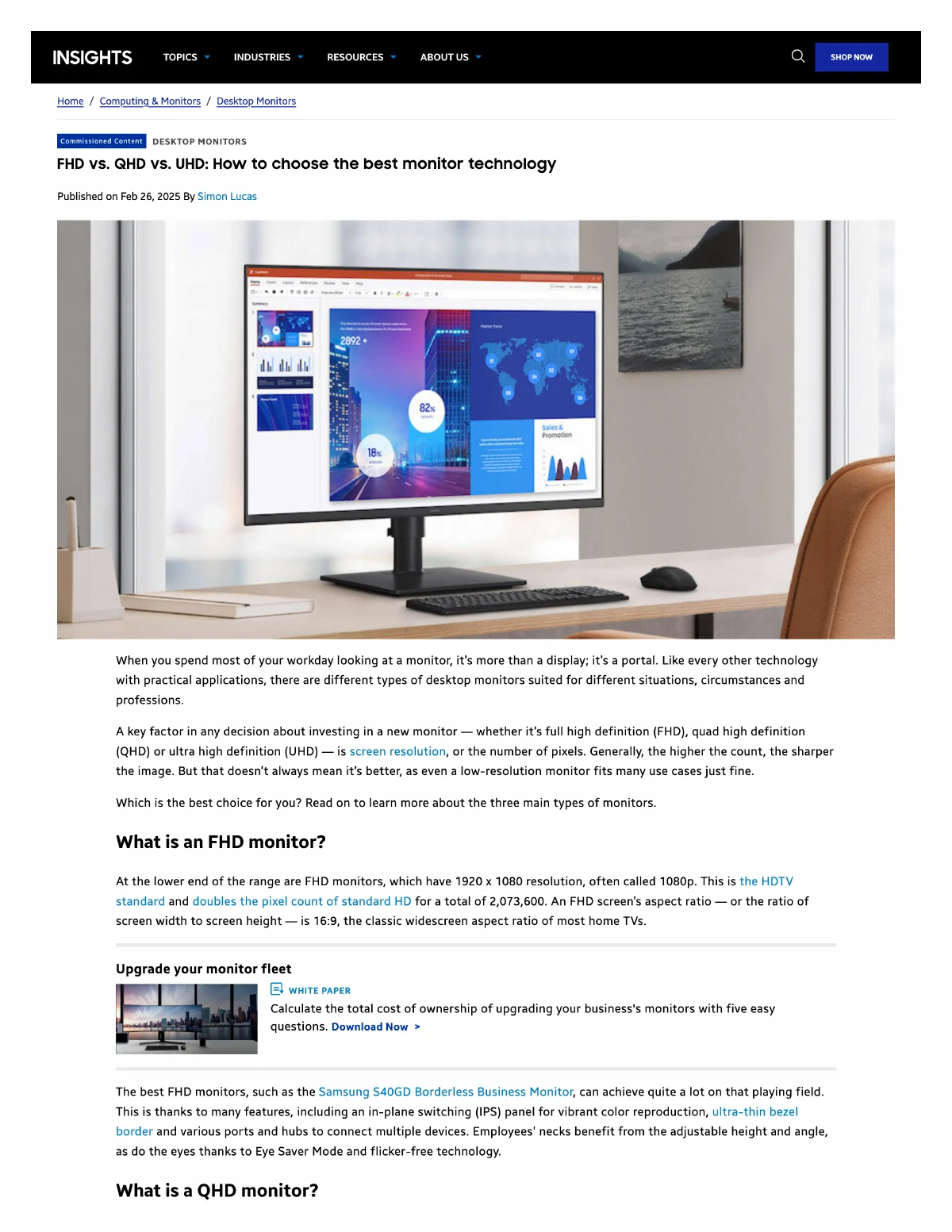
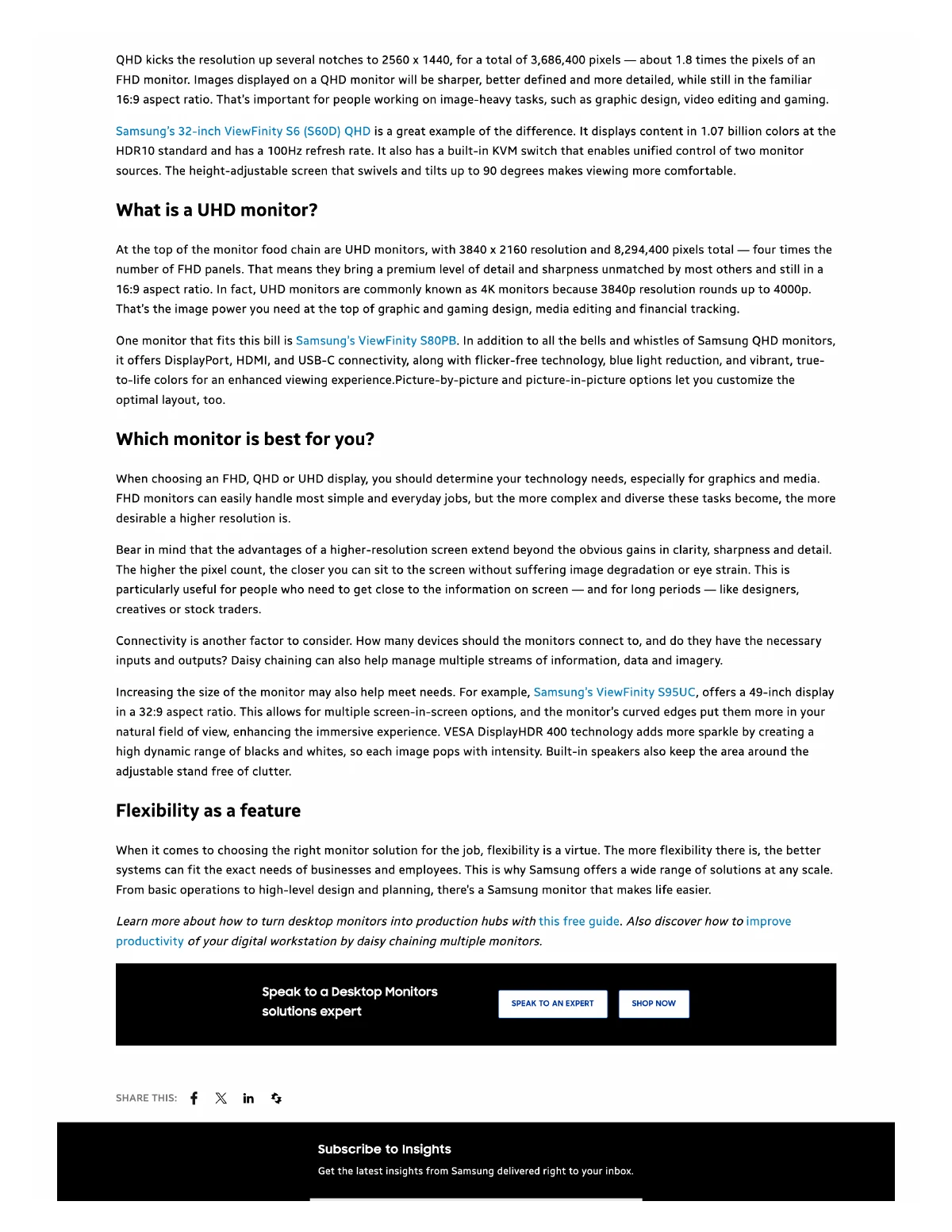
Refocusing a high-traffic monitor program on useful buying decisions, supported by video and visual explanations.
The starting point
Broad monitor definitions brought in readers, but too few continued to Samsung’s product pages. The program needed to reach prospective buyers and help them make a decision while protecting its existing search audience.
The decisions
I compared articles that attracted attention with those that also prompted action. The stronger pieces addressed questions closer to a purchase decision and often included a useful visual element.
I developed product-led topics for readers ready to evaluate a monitor, then used SEO tools and audience analytics to build educational topics for people still exploring their options.
I recommended multiple search pillars, clearer routes to product information, and more effective placement of buying links. To make the plan practical, we repurposed Samsung’s existing imagery into new visual assets.
From plan to published
Articles, infographics, and videos worked together to explain monitor choices and workplace benefits. The content plan balanced product education with broader buying guidance, rather than relying on a few general definitions.
Explore the work
Selected pieces from the program. My role was content strategist; individual publication credits are noted below.
Buying guide
A comparison helps readers connect monitor technology to their work requirements.
Article by Simon Lucas
Article
Workplace well-being provides a practical entry point into monitor selection.
Article by Simon Lucas
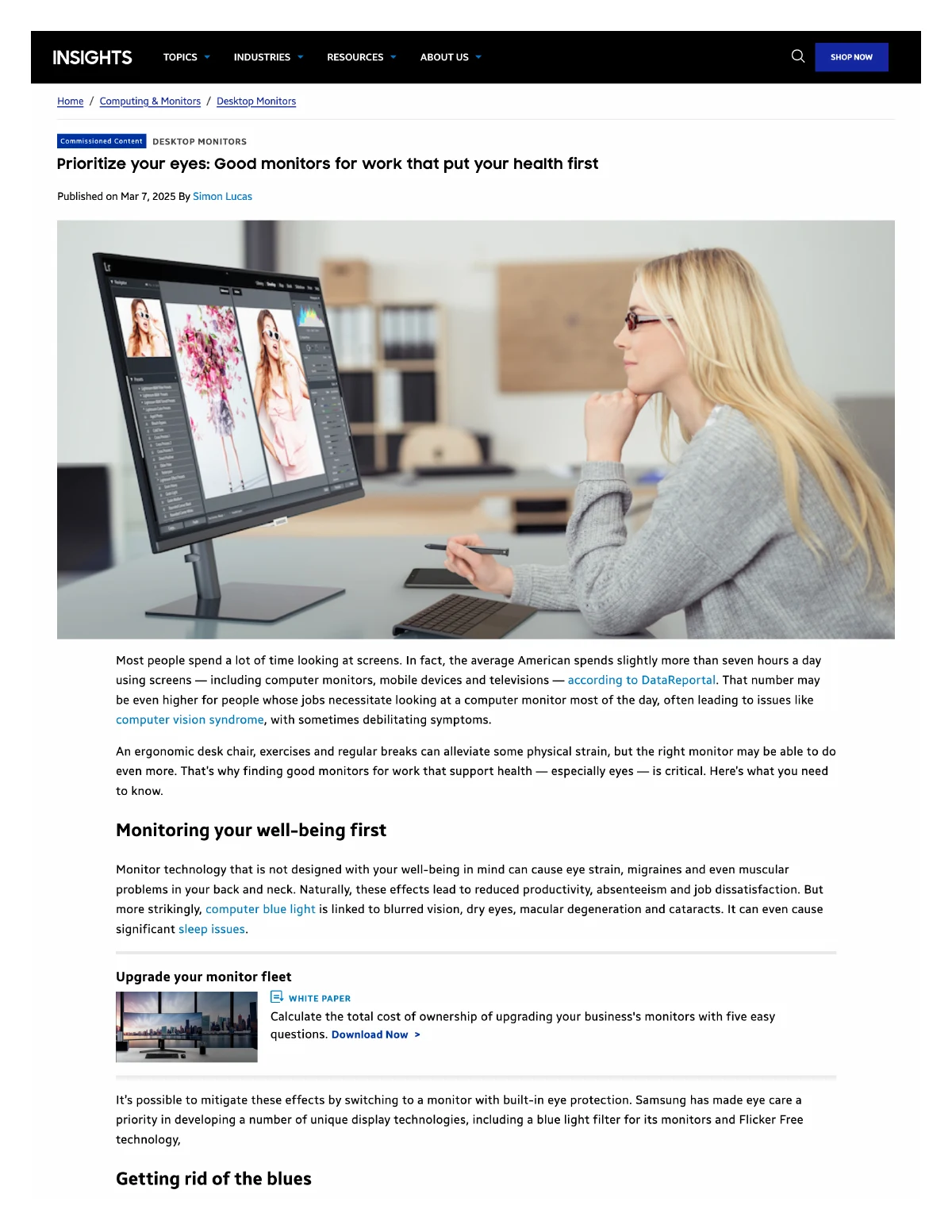
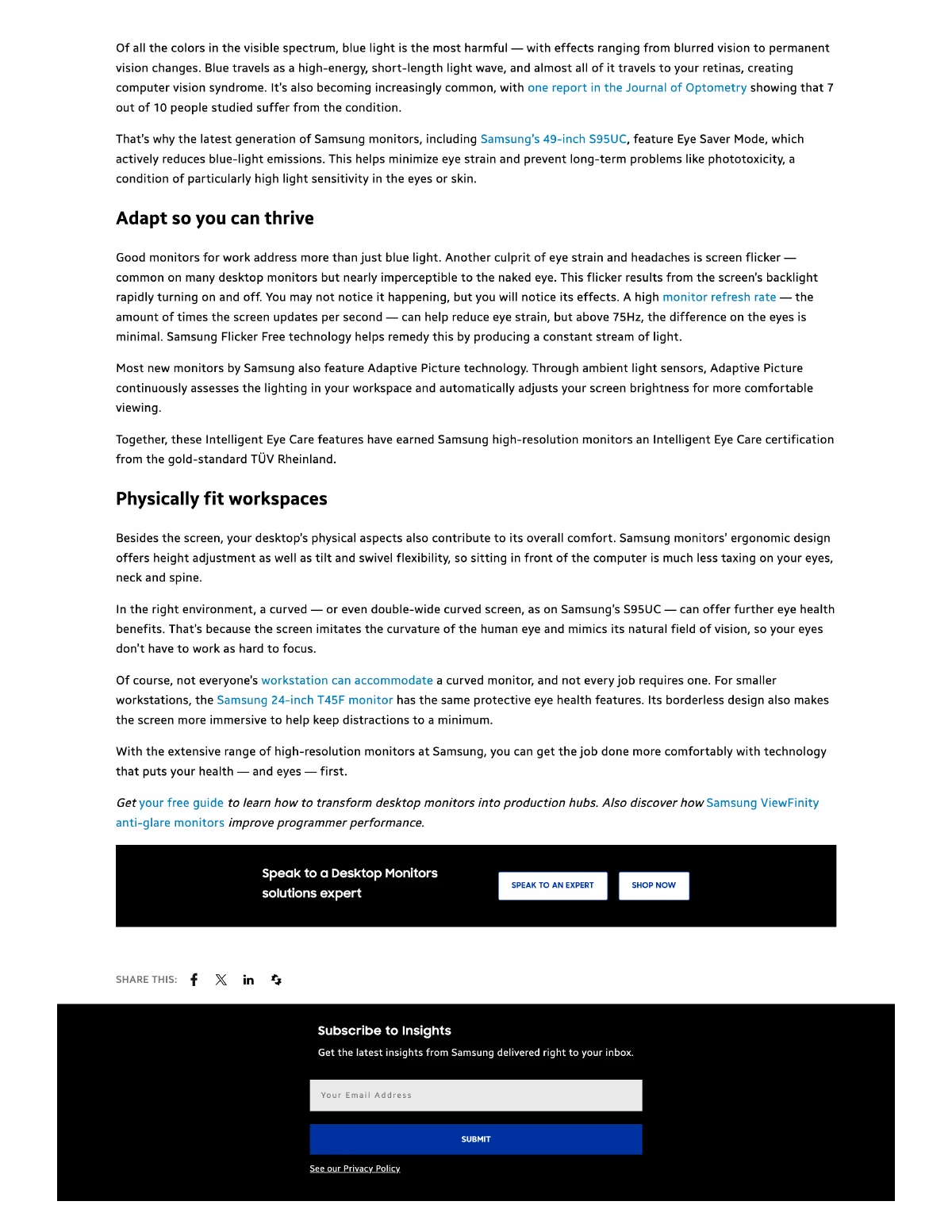
Video
Video from the supporting monitor content program.
Play video: Monitor video sampleWhat followed
The revised articles improved conversion while maintaining readership. The work demonstrated why traffic quality and a useful next step mattered alongside search visibility.
Next case study
Rebuilding an education audience